
Comparison
5 best website builders for creatives in 2026
Compare creative website builders by portfolio SEO, design, inquiries, galleries, blogging, commerce, booking workflow, and current pricing.
Start with Gallurio if
Creative businesses that want two highly configurable showcase pages for their brand, services, best projects, and gallery collections, connected directly to inquiries and bookings
Consider another option if
Creatives who need a large publishing site, a blog, ecommerce checkout, client proofing, print sales, or arbitrary additional page types
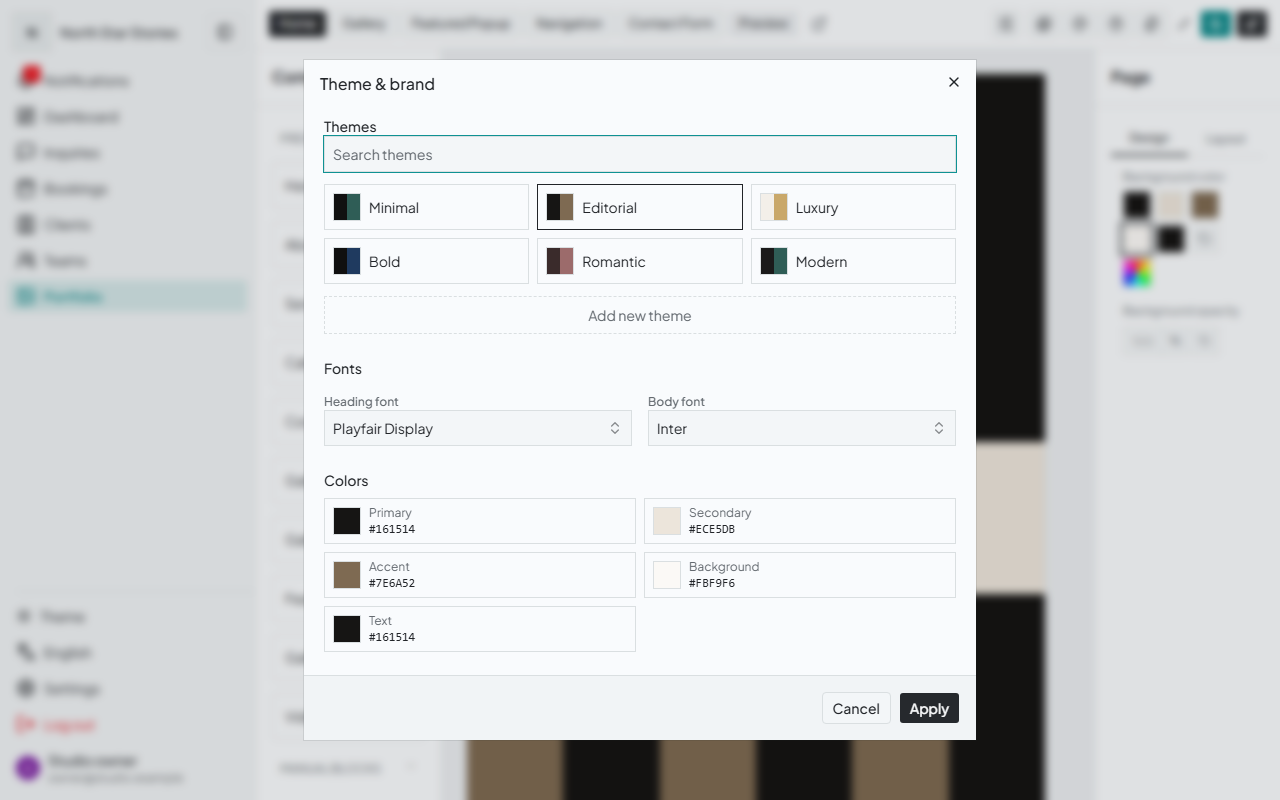
A creative website should be the storefront for the business: a place to establish the brand, explain the skills behind the work, and let the best projects do the selling. Gallurio provides two configurable showcase canvases - Home and Gallery - plus the Contact experience and the business workflow behind it.
For a small event or creative business, Gallurio is the best-value place to start because the visual portfolio, project collections, inquiry flow, and booking workspace are one product. The alternatives deserve attention when the site needs additional page types, client delivery, publishing, or ecommerce checkout.
Gallurio value: one Pro plan at $15.00/mo — $150/yr includes the public portfolio, inquiry form, clients, bookings, calendar, teams, and invoice PDFs. There is no separate website or CRM tier.
The 60-second answer
| Pick | Current entry price | Best for | Important trade-off |
|---|---|---|---|
| Gallurio | $15.00/mo — $150/yr | A configurable creative storefront for skills, services, projects, and collections, connected directly to inquiries and bookings | Home and Gallery are the two showcase canvases; no blog, ecommerce checkout, or client proofing |
| Pixieset Website | Free; Plus $12/mo annually or $15 monthly | Photographers who may also need galleries, proofing, and print sales | The broader workflow is spread across Pixieset products or the $28/mo Suite |
| Squarespace | From $16/mo annually | Polished, flexible marketing sites with blogs and commerce | Booking records and event operations still need another system |
| Wix | From $17/mo annually; free branded plan available | Broad design freedom, apps, blogging, and ecommerce | Business features can require higher plans and the booking workflow remains separate |
| Format | From $10/mo annually | Standalone creative portfolios with image-focused templates | Basic limits include 10 pages and 70 high-resolution images |
Prices were checked in USD on 2026-08-23. Wix pricing varies by region, and every provider can change plans or promotions, so use the linked first-party pages before purchasing.
What was assessed
The five platforms were compared against the jobs a working creative business needs its website to perform:
- Present skills, services, and strong work cleanly on desktop and mobile.
- Organise best projects and gallery collections into a convincing body of work.
- Express a recognisable brand and compose layouts without requiring code.
- Give visitors a clear path to inquire or buy.
- Preserve the inquiry as a usable business record.
- Support the content the business actually publishes: galleries, pages, blogs, or products.
- Stay affordable after adding the CRM, booking, gallery, or commerce tools required behind it.
- Give search engines and potential clients enough technical and visible context to discover the work.
Gallurio was tested directly. Competitor features and prices were checked against their official product and pricing pages linked below.
Gallurio: best creative storefront with the business system built in
Gallurio gives a creative business two independent drag-and-drop showcase canvases: Home and Gallery. Contact is configured separately and remains available across the public portfolio. This focused architecture does not mean a fixed-looking website. It concentrates the design freedom on the two pages where a creative business actually presents and proves its work.
Home can combine a hero, story, services, video, calls to action, individual images, text, and featured projects. Gallery can become a visual catalogue using grid or masonry layouts, featured work, and project collections that open into their own focused views. Creators can compose sections from presets or build layouts from containers and multi-column blocks, then control spacing, alignment, backgrounds, imagery, colours, typography, and button styling.
That makes the published site a creative storefront: not an ecommerce checkout, but the place where visitors understand the brand, see its range of skills, explore its strongest projects, and decide whether the work fits them.
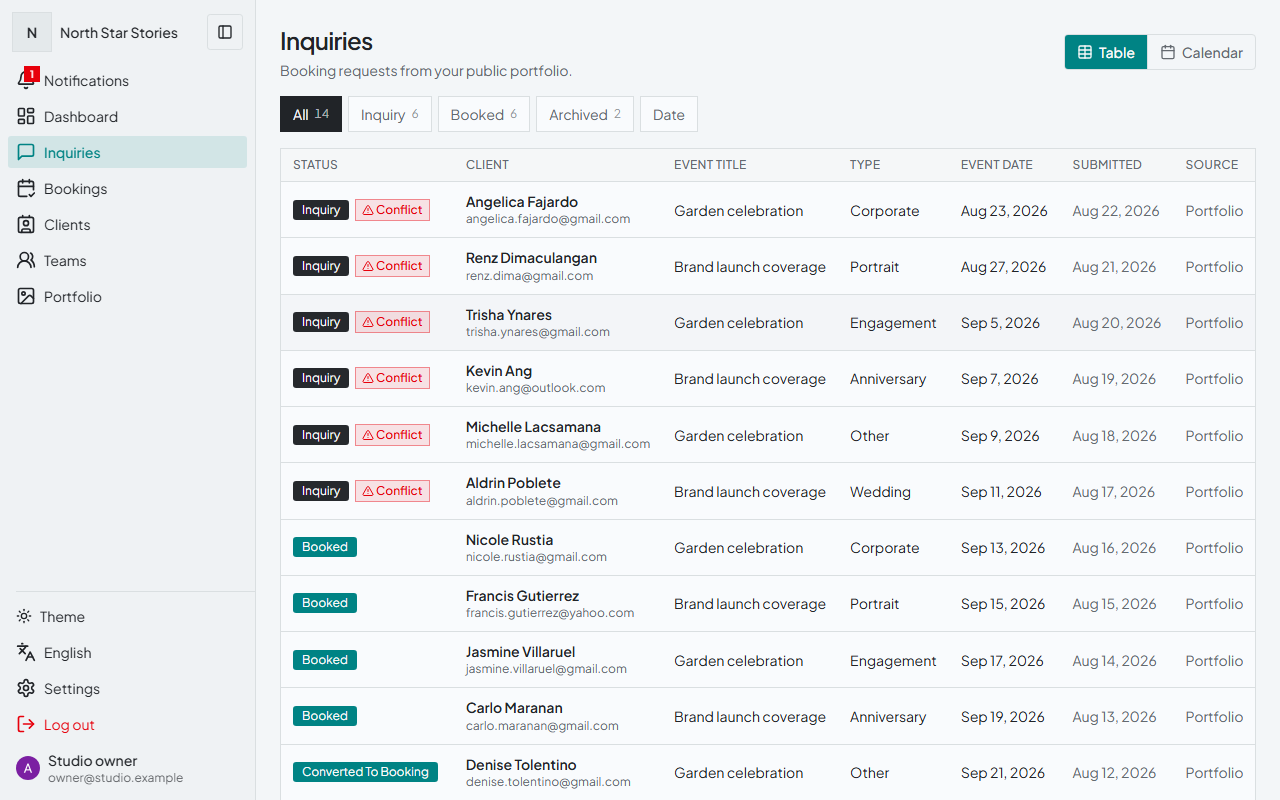
The operational difference appears after a visitor fills in the form. Gallurio creates the inquiry, client, and booking records together. The job appears in the workspace and calendar, the client has a history, and the booking can produce an invoice PDF. That entire workflow is included at $15.00/mo — $150/yr.
For a photographer, planner, venue, stylist, DJ, or other event creative, this is not merely a form attached to a CRM. It is the public expression of the business and the working system behind it in one subscription.
Gallurio also covers the focused SEO foundation a portfolio needs. Owners can configure Home and Gallery search descriptions, a search title, social preview media, and indexing preference. The published pages are server-rendered with canonical URLs and structured business/gallery data. This helps search engines and AI retrieval systems understand the service and the work, while the owner still supplies the specific locations, projects, expertise, and useful copy that deserve to be discovered. No builder can guarantee indexing or ranking.
Gallurio is not the right builder for a magazine-style site, a large blog, ecommerce checkout, client proofing, print fulfilment, or dozens of additional page types. Those are limits on site scope, not on how freely a creator can arrange and style the two showcase pages.

Pixieset Website: consider it for a photography ecosystem
Pixieset Website is built for photographers and sits beside Client Gallery, Studio Manager, Store, and the Mobile Gallery App. Its free Website plan includes 15 pages, 100 photos, five blog posts, unlimited bandwidth, SSL, and a mobile-optimised site. The Plus plan is $12 per month billed annually or $15 monthly and adds unlimited pages, photos, and posts, a custom domain, analytics integrations, and removal of the Pixieset banner.
This is the strongest option here when the website needs to grow into proofing, favourites, downloads, and print sales. The trade-off is product structure: a complete photography workflow may mean combining products or moving to the Suite, which starts at $28 per month billed annually.
Gallurio remains the better-value starting point when presenting projects and collections, generating inquiries, and running clients, event bookings, teams, and invoices are the priority, while gallery delivery happens elsewhere. Read Gallurio vs Pixieset.
Squarespace: consider it for a broader polished website
Squarespace provides a mature template system, flexible pages, blogging, ecommerce, memberships, analytics, and established SEO controls. Its entry website plan was $16 per month billed annually when checked on 2026-08-23, with a 14-day trial.
Choose it when the website is a substantial publishing or ecommerce channel in its own right. A growing brand can add page and content types that Gallurio does not attempt. Gallurio instead puts its layout freedom into the Home and Gallery canvases and connects the result to real project work.
The operational trade-off is the handoff. A contact form produces a message, but the client record, event booking, payment state, calendar, and invoice still need a second system. Gallurio includes that system in its Pro price. Read Gallurio vs Squarespace.
Wix: consider it for maximum general-purpose flexibility
Wix combines a free branded website option with an open-ended editor, templates, apps, ecommerce, blogging, marketing tools, and appointment scheduling products. Its Light plan was $17 per month billed annually in the United States when checked on 2026-08-23. Wix states that prices vary by location.
This is the option for a creative who wants to build beyond a portfolio and is willing to choose from a much larger product surface. Wix offers broader general-purpose site architecture; Gallurio offers a more focused visual builder for showcasing work and converting it into event bookings.
That freedom can produce more setup and a larger stack. Wix Bookings is aimed at appointment slots, while event work still needs dependable client, deposit, invoice, and booking records. Gallurio is simpler when those records matter more than a general app marketplace. Read Gallurio vs Wix.
Format: consider it for a standalone creative portfolio
Format is the most portfolio-specific standalone website builder in this group. Its official Basic plan was $10 per month billed annually, normally $14 monthly, when checked on 2026-08-23. It includes mobile-optimised themes, a first-year custom domain, SEO tools, an online store, social integration, and creative-focused presentation features. Basic is limited to 10 website pages and 70 high-resolution images.
Choose Format when presenting a body of creative work is the only job and you want a standalone portfolio product. Gallurio combines that presentation role with configurable project collections, services, video, and the workflow that turns every good inquiry into a client and event booking.
Which website builder should you choose?
Start with the result the website must create:
- Choose Gallurio when you want a discoverable, configurable storefront for your brand, skills, services, projects, and collections, with every inquiry becoming a client, booking, calendar entry, and invoice-ready record.
- Choose Pixieset when client gallery delivery, proofing, downloads, and print sales are central.
- Choose Squarespace when the business needs a polished multi-page publishing or commerce site.
- Choose Wix when broad design freedom and an app ecosystem matter more than a focused workflow.
- Choose Format when the portfolio itself is the product and a standalone creative presentation tool is enough.
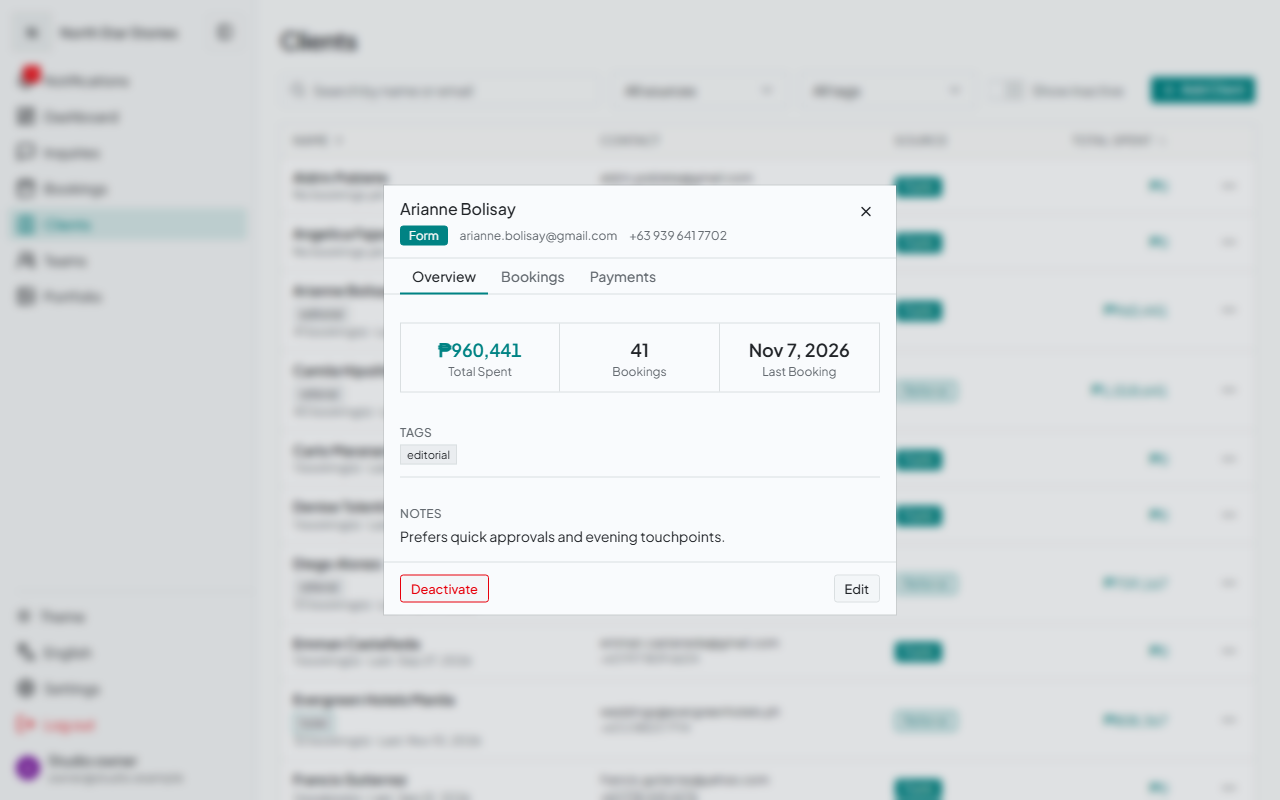
The practical comparison is not website subscription against website subscription. It is the cost and friction of the whole stack: creative storefront, project collections, inquiry form, CRM, booking calendar, team access, gallery delivery, commerce, and invoicing. Gallurio owns both ends of that journey: showing why the work is worth booking and running what happens after someone chooses it.
Sources and verification dates
- Gallurio pricing, with the current regional price rendered directly on this page
- Pixieset Website pricing, checked 2026-08-23
- Squarespace pricing, checked 2026-08-23
- Wix plans and Wix's plan guide, checked 2026-08-23
- Format pricing, checked 2026-08-23
Prices, promotions, and plan limits change. Recheck the linked provider page before making a purchase or migration decision.
Frequently asked questions
What is the best website builder for creatives?
Gallurio offers strong value to small creative businesses because its regional Pro price includes two configurable showcase canvases for their brand, skills, services, projects, and gallery collections, plus the inquiry and booking workflow behind them. Pixieset is stronger for photography delivery, Squarespace and Wix support broader site architectures, and Format is a focused standalone portfolio builder.
Is Gallurio a full website builder?
Yes, for a creative portfolio. Home and Gallery are independent drag-and-drop canvases with reusable sections and manual layout blocks, while Contact is configured as the inquiry experience. Creatives can present their story, services, videos, individual work, and project collections using their own colours and typography. Gallurio is not a general publishing or ecommerce builder for blogs, checkout, memberships, or arbitrary extra page types.
Which website builder is best for photographers?
Start with Gallurio when you want freedom to present your skills and best projects across configurable Home and Gallery layouts, then turn interest into tracked clients and bookings. Choose Pixieset when proofing, downloads, favourites, and print sales are central. Choose Format for a standalone portfolio, or Squarespace and Wix for broader publishing and commerce sites.
Can I keep my current website and still use Gallurio?
Yes. A creative business can keep its existing website and link its main inquiry button to the published Gallurio portfolio, where Contact opens. Gallurio can then handle the inquiry, client, booking, calendar, and invoice workflow behind the site.
Which creative website builder includes portfolio SEO controls?
Gallurio provides focused controls for Home and Gallery search descriptions, canonical URLs, social previews, structured business/gallery data, and indexing. Squarespace, Wix, Pixieset, and Format offer broader or different SEO toolsets; none can guarantee rankings.